Monday, 22 October 2012

10. Wickedness vs Devotion

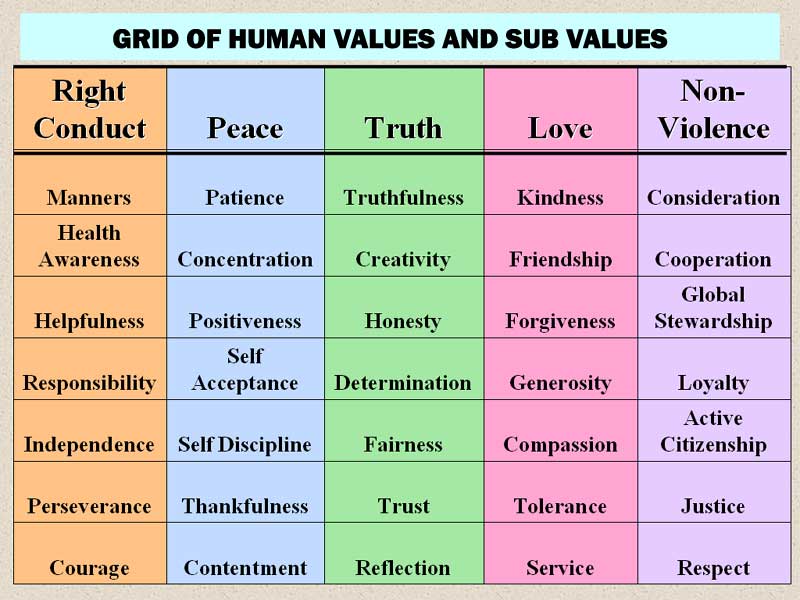
Human values

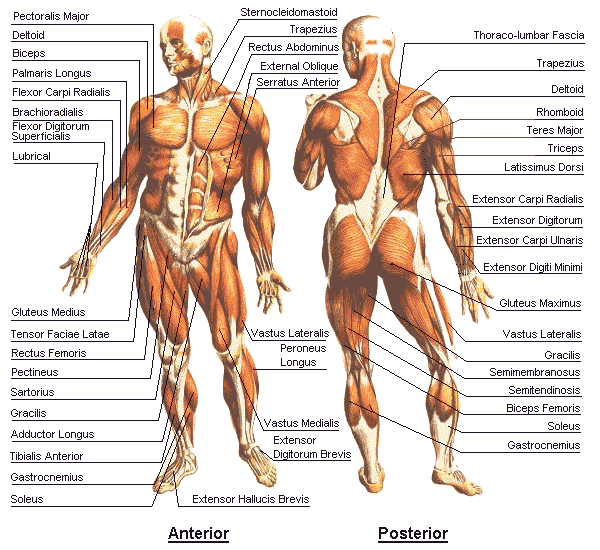
Anatomy Th3

Wickedness

Impiety, cynicism, lack of regard for others, contempt, ungodliness
Evil is committed conciously and of free will
Wickedness naturally results in social isolation and relationship breakdown.

Devotion

Piety, reverence, goodness, high regard, appreciation, respect, godliness, veneration

Wickedness with its roots in gluttony and bitterness needs the positive selfless act of devotion to a person or to a cause to overcome it.

Devotions are private prayers and practices used to promote spiritual growth and communion with God or nature.   Among christians private prayer and bible reading are probably the most common practices.  Book of common prayer

http://www.churchofengland.org/prayer-worship/join-us-in-daily-prayer.aspx

O Lord our God,
grant us grace to desire you with our whole heart;
that so desiring, we may seek and find you;
and so finding, may love you;
and so loving, may hate those sins from which
you have delivered us;
through Jesus Christ our Lord.


 This is the prayer of Anselm 1033-1109

If we seem a long way from evidence based aromatherapy then I apologise but practicioners, besides their own self care and beliefs, need to work not only with doctors and nurses but an individuals own beliefs and their priests as well when it comes to the mental aspects particularly in end of life care.

 Ian Brealey
Shirley Price Aromatherapy

9. Bitterness vs Generosity

Human values

Anatomy Th2

Bitterness of heart

Rudeness, sourness, intolerance, fanatacism

Generosity

Kindness, practicing goodwill, tolerance, open-mindedness

This is a good point to look at some of the principles of Bach Flower Remedies.  Dr Bach became convinced that it was emotional states which could predispose people to illness. http://www.bachcentre.com/centre/remedies.htm

Ian Brealey
Shirley Price Aromatherapy

8. Gluttony vs Abstinence

  Human values


Anatomy Th1, the liver, gallbladder and pancreas

Gluttony

Overeating

Abstinence

Eating in moderation

Bringing our eating into balance requires us to eat little and often and do so in a social way.  By not eating regularly (breakfast, lunch, tea) and socially with family or friends the way is open to binging on food and drink.

One of the most successful weight control programs is called weightwatchers.  By making the weekly effort to visit the weightwatchers meeting the weight comes into order and it is possible for some obese people to steadily lose half their bodyweight!

 Perhaps it is the social aspect of weight watching with others that causes self care and makes it easier.  Hildegard provides a tip to weightwatching.  When appetite for no reason prompts an unnecessary or extended meal to instead lick a diamond with the tongue.  It doesnt have to be a real diamond.  The beauty of the light reflecting off the diamond helps stimulate our reason and the need for self care.

Lets do a mental exercise.  If we picture ourselves evolving we can picture ourselves as a worm (our gut with its gut brain - our gut feeling), a dinosaur (a grazing or fighting dinosaur with our primitive brains - our instincts) or our selves as humans with our highly developed brains, personalities and social organisation (our ability to reason and be reasonable).

Lets imagine it is possible that viruses could be chemically intelligent enough to have us switch off our dinosaur or human brain and become a glutton?  Hildegards vision of a glutton for which the antidote is deliberate abstinence is of a gluttone of a worm eating until its all gone! With our social organisation and our ability to perceive beautiful things like the light reflecting off the diamond we can get our reason working again so that if we cannot see ourselves we can see others.

Ian Brealey
Shirley Price Aromatherapy

7. Inapproriate mirth vs yearning for god

Human values

Anatomy C7, the spleen and the lymphatic system

Inappropriate mirth

Making fun of others, cynicism, satire, mockery, malicious joy

Yearning for god

looking for the good, cheerfulness, good humour

Spleen,  Lymphatic,  Lymphocyte

 Does exercise make for a healthier immune system? The lymph system is the heart of our immune system producing anti viral and anti tumour cells such as the lymphocyte. Circulation of the lymph is helped by the exercise of our muscles, walking, yoga, manual labour. Does exercise improve our state of good humour and feeling of well being. Is exercise itself a social activity?

Ian Brealey
Shirley Price Aromatherapy

Sunday, 21 October 2012

Radiant beauty


Radiant beauty can be young or old. Queen Elizabeth born 21 April 1926. Holistic care can add years to your life but importantly life to your years and to those around you.

Ian Brealey 
Shirley Price Aromatherapy

6. Anger vs Tranquility


Human values

Anger is the greatest motivator of all.  This is why politicians of left and right seek to stir up anger an preach violence against a privileged social class or minority racial group.

We dont often celebrate the men of peace in troubled times as politicians.  Personally I like to look back to the words and actions of British Premier Stanley Baldwin at the time of the rise of Stalin and Hitler.

In our time perhaps within months there could be nuclear armed conflict with Iran.  Lets look back to the last time human civilisation faced the peril of global war and obliteration and the run up to that.

In the UK 1931 general election the Conservative Party achieved 470 seats, 76% of the total under the leadership of Stanley Baldwin.  Following the advent of Stalin in 1928 and Hitler in 1932 the mood in europe quickly darkened and europe was again divided into two armed camps at war.

24 Oct 1933- Winston Churchill, addressing the House of Commons, gives an early warning on the shape of things to come by stating that Germany is well on the way to becoming the most heavily armed nation in the world. This prophetic statement is remarkable in that Germany was still bound by the Treaty of Versailles banning it from re-arming itself after the end of World War I. timeline_1930-1939_Gauntlet Germany did not officially declare formation of the Luftwaffe until March 1935.

 March 1934- Prime Minister Stanley Baldwin, assures the House of Commons that should the Geneva Disarmament Conference fail, Britain would take steps to organise an Air Disarmament Conference. Should that fail, then the strength of the RAF would be increased to match that of the strongest air arm within striking distance of the UK.

 July 1934- A major expansion of the RAF is announced, with the number of Home Defence squadrons increased from 52 to 75, and bringing the total first-line strength to 128 squadrons within five years.

 22 May 1935- The British Government votes to treble the number of frontline military aircraft available to defend U.K. soil. This adds up to an increase of 1500 aircraft of all types.

In the UK 1935 general election of 14 November 1935 the issue of rearmament (guns or butter) was put directly to the people.  The new striking power of aerial bombardment had become apparent and the will to use it was evident.  In 1934 Baldwin began to speak of the peril of aerial bombardment and act to expand the RAF equipping it with bases and modern aircraft.

In the 1935 election he said "The whole world is watching this election because in this election democracy itself is on trial.  Are we prepared to make sacrifices for democracy?  It is the duty to show the world that the democracy of this old country whose people are steeped in the traditions of freedom, can pursue a constant course, that they can make up their minds and will be as resolute as any dictatorship as have ever existed."   Baldwin got his mandate for rearmament at a time when many were for unilateral disarmament.  Born 3 August 1867 Baldwin was then 68 and retired in 1937.

Anger

Impatience, fury, rage, aggression, madness, criminality

Tranquility

Patience, Gentleness, Composure, Kindness, Peacefulness, Serenity.

C6 is related to the gastro-intestinal system.  Can persistent anger acidify the body damaging the intestinal flora?  Gut flora

Here we come to the issue of antibiotics both as medicine and found in food.  As we age there is a strong argument for the elimination of dairy and red meat from the diet because of their antibiotic content.  Can imbalance in the gut flora effect the immune system resulting in autoaggressive immune responses by the body crushing everything in its way?  Here we can see that fasting would be of real benefit to the body.

Our life energy strengthens the heart against destruction and injustice. Through our social intelligence we can defeat evil however focussed and well resourced. Evil destruction eventually shatters itself against the united strong tranquil heart. The moral is as to the material as three is to one where our aims are good.

 By doing the wrong thing we turn against ourselves. The autoaggression that follows springs from a lack of self care and self love. Anger defeats itself.

 Mind, body and spirit can be seen to be inseprable.  Diet, exercise and self care are keys to health - longer lives and happier lives and the key control mechanism is the mind - the brain, the spinal chord and nerves sending and receiving information and instructions to every part of the body.  Our internal environment is as important to us as our external environment. A moody body is just as troubling to our minds as a moody colleague, neighbour or partner.


Ian Brealey
Shirley Price Aromatherapy

5. Cowardice vs Divine victory

Human values

Anatomy  Now to C5 and the diseases of the skin.  

C5 and the diseases of the skin, acne, eczema, how does Hildegard propose to put the worlds dermatological industry out of business by addressing the internal factors which predispose to acne, eczema, even sinusitis? The use of external creams whether medically prescribed steroids or creams with essential oils is often useful in treating these conditions. Essential oils have an important feature in that they also impact on the brain and our acceptance of these conditions.

 This is why medically prescribed medicines or holistic creams often do not work is the user doubts their effectiveness. So we come to a true understanding of the placebo effect that the causes can be just as much internal and emotional as external and mechanistic. By denying this and excluding holistic treatments as 'unevidenced' the result is partial care and partial care cannot be quality care. I have seen a doctor with skin made paper thin by the lifelong application of steroid creams who would not use creams with essential oils which would clear the conditions in days.

 The skin in particular is very sensitive to our internal emotional states. The radiant beauty of the skin outside is matched by the radiant beauty within. As we age this is harder to sustain not only because of the sun damage to the skin but our internal doubts and adaptions.

Cowardice

Resignation, Frustration, Despair.

"I just want a quiet life and I will keep my mouth shut whether people do good or bad."

Cowardice and resignation is thought by Hildegard to give rise to skin complaints.  While attempts are made to treat these from the outside we should not neglect their internal emotional origins.  By having confidence that our condition will be cured one of the predisposing factors will be removed making a cure more likely.

Gods victory

Confidence, trust in the divine, faith in the divine

Links
It is not the critic who counts; not the man who points out how the strong man stumbles, or where the doer of deeds could have done them better. The credit belongs to the man who is actually in the arena, whose face is marred by dust and sweat and blood; who strives valiantly; who errs, who comes short again and again, because there is no effort without error and shortcoming; but who does actually
strive to do the deeds; who knows great enthusiasms, the great devotions; who spends himself in a worthy cause; who at the best knows in the end the triumph of high achievement, and who at the worst, if he fails, at least fails while daring greatly, so that his place shall never be with those cold and timid souls who neither know victory nor defeat
Theodore Roosevelt

Saturday, 20 October 2012

Emotions and aromatherapy

I
 Our brains are the most important invention in the universe, a miracle of computing power. Because the brain is biological/chemical in nature essential oils give us the ability to influence our brains by biological/chemical means which improve our ability to socialise and communicate and even renew the aging brain. Computor science is giving us important insight into our emotions and the partnership we have evolved with plants to percieve the world, as it is, as a happy place and to 'know ourselves'. 

The brain doesnt come with a user manual. We write that as we live our lives!
Ian Brealey, Shirley Price Aromatherapy


In psychology, philosophy, and their many subsets, emotion is the generic term for subjective, conscious experience that is characterized primarily by psychophysiological expressions, biological reactions, and mental states. Emotion is often associated and considered reciprocally influential with mood, temperament, personality, disposition, and motivation, as well as influenced by hormones and neurotransmitters such as dopamine, noradrenaline, serotonin, oxytocin and cortisol. Emotion is often the driving force behind motivation, positive or negative. The physiology of emotion is closely linked to arousal of the nervous system with various states and strengths of arousal relating, apparently, to particular emotions. Although those acting primarily on emotion may seem as if they are not thinking, cognition is an important aspect of emotion, particularly the interpretation of events. For example, the experience of fear usually occurs in response to a threat. The cognition of danger and subsequent arousal of the nervous system (e.g. rapid heartbeat and breathing, sweating, muscle tension) is an integral component to the subsequent interpretation and labeling of that arousal as an emotional state. Emotion is also linked to behavioral tendency. Research on emotion has increased significantly over the past two decades with many fields contributing including psychology, neuroscience, medicine, sociology, and even computer science.

A mood is an emotional state. Moods differ from emotions in that they are less specific, less intense, and less likely to be triggered by a particular stimulus or event. Moods generally have either a positive or negative valence. In other words, people typically speak of being in a good mood or a bad mood.
Mood also differs from temperament or personality traits which are even longer lasting. Nevertheless, personality traits such as optimism and neuroticism predispose certain types of moods. Long term disturbances of mood such as depression and bipolar disorder are considered mood disorders. Mood is an internal, subjective state, but it often can be inferred from posture and other behaviors. "We can be sent into a mood by an unexpected event, from the happiness of seeing an old friend to the anger of discovering betrayal by a partner. We may also just fall into a mood."

source wikipedia

Anatomy for beginners

The body
 Von Hagens takes the audience on an amazing journey through the human body, exploring functions that all of us perform every day, but of which most of us remain unaware. In each programme, he performs a human dissection, focusing on different anatomical systems. Filmed before an invited audience in Germany, the programmes explain everything you could want to know about the human body.

When one sees the amazing consistency of the brain and spinal canal as a fragile living organ one realises the potential power of aromatherapy to influence mood and its potential to assist where brain function is impaired as in advancing age.  Aromachemicals passing the blood brain barrier can affect the brain tissue.  Aromachemicals can also affect the brain directly by being detected by the nose and entering the brain as signals.

The human brain is the most complex and fascinating structure in the universe and yet our ability to consciously control it in emotional terms by happy interaction with others is by comparison quite crude, almost rough and ready.  We are evolved to function in mechanical terms.  However we seek more than that.


Ian Brealey
Shirley Price Aromatherapy

4. Hard heartedness vs Compassion

Human values

We now come to C4, the tongue and the sense of taste.  Our words have a profound impact on others. 

The brain of a young child is very sensitive. If a young child is exposed to violence and hardheartedness then that will make a profound impression for good or ill on the childs personality.  Here we discover an important thing.  If we ourselves neglect one of the 35 aspects of our spiritual life or even have one run out of control and dominate our personality can that result in harm to others?  In this way do we encounter hard heartedness through our own ignorence or negligence of our own natures?  

Ian Brealey
Shirley Price Aromatherapy

Out of sheer self-protection, our tendency is to become hard ourselves: we take a hard line, develop hard feelings, and in the process become hard-hearted and socially isolated.

Hard heartedness 
Hard hearted Hannah

heartless, inhuman, unkind, insensitive, cruel, hard, unsympathetic
Theres certainly plenty of biblical thought on this
Bible reading
Islamic guidance 

Compassion
The Dalai Lamas message on compassion


warm, soft hearted, humane, loving, kind, warm, understanding, sensitive, gentle 

"Recently I met a group of scientists in America who said that the rate of mental illness in their country was quite high-around twelve percent of the population. It became clear during our discussion that the main cause of depression was not a lack of material necessities but a deprivation of the affection of the others."

 "I believe that at every level of society - familial, tribal, national and international - the key to a happier and more successful world is the growth of compassion. We do not need to become religious, nor do we need to believe in an ideology. All that is necessary is for each of us to develop our good human qualities."

and when you come across a hard hearted person?  I like the Dali Lamas advice - move away from them!


Ian Brealey


Friday, 19 October 2012

3. Love of entertainment vs simplicity

Human values

Anatomywise we come to C3 and the sense of smell.

The nervous system


Love of entertainment and entertainers.  On the one hand, Jokes, carelessness, recklessness, impolitesness, tactlessness, immodesty, rudeness, disregard, derision, condescension - all the attributes of celebrity entertainers.

and the antidote

Respectful, care, discernment, politeness, tact, modesty, discretion, courtesy, cherishing, esteem, honour, intuition, perception

The power of smell - Aromatherapy

"whoever gets really angry should take roses (rosa damascena oil) and less sage (salvia officinalis oil) and smell this in the moment of anger."  5ml of almond oil, 4 drops of rose oil, 2 drops of sage oil.  Use as perfume, body oil or simply sniff it.

A macerated oil of lily (lilium candidum) "gladdens the human heart and raises the spirit to create right thoughts".  Take a botttle of 100ml almond or olive oil.  Put in lily flowers.  Leave on a sunny shelf for 10 days.  decant into a dark bottle straining out the plant material.

Lavender oil too is clearing for the spirit.  The oil would have been made in St Hildegards day with lavender flowers in 100ml of olive or almond oil left in the sun for 10 days.  Physically lavender is antiseptic and can be massaged over the whole body.  A simple test for allergy is to apply 1 drop to the skin and rub in.  Dont use if a red spot appears.

Fennel is praised for its ability to combat depression.  "people who suffer from melancholy take fennel oil and apply to the temples, nape of the neck, breast and entire body, rubbing the area around the solar plexus - the depression will disappear."

Fennel also mades a remedy for eye inflammations such as conjunctivitis - soak a hankerchief in a cup of fennel tea made from the seeds and apply to the eye as a compress.

 Sceptics say that essential oils in their modern form were not around in St Hildegards day and while this is true anyone can and did put flowers in 100ml of almond oil or olive oil and leave in the sun for 10 days to create a maceration from ancient times upto the present day.

Essential oils are extremely helpful remedies and even strong mood changers.  Odour molecules reach the sense of smell in the olfactory organ on either side of the nasal cavity.  The chemical odour produces in the receptors of this organ signals that are transmitted directly to the limbic system of the brain, which is at the centre of emotions, behaviour and memories.

So be amused rather than be melancholy?


2. Petulance vs Discipline

Human values

Today we move onto Petulance vs Discipline

http://news.investors.com/ibd-editorials-on-the-left/101812-629902-obama-beat-romney-by-attacking-his-weaknesses.htm

Petulance is characterised by chaotic thinking.  The antidote is order and harmony.  Music has a profound effect.


 C2 the hearing. Discipline includes harmonious music which is a great antidote to petulance. http://www.last.fm/music/Sinfonye/HILDEGARD+VON+BINGEN:+Symphony+of+the+Harmony+of+Celestial+Revelations

 C2 the facial muscles, laughter, the antidote to petulance


Anatomy C2 the submandibular and sublingual glands

 Courtesy of wikipedia: discipline is systematic instruction given to disciples to train them as students in a craft or trade, or any other activity which they are supposed to perform, or to follow a particular code of conduct or "order". Discipline is the assertion of willpower over more base desires, and is usually understood to be synonymous with self control. Self-discipline is to some extent a substitute for motivation, when one uses reason to determine the best course of action that opposes one's desires. Virtuous behavior is when one's motivations are aligned with one's reasoned aims: to do what one knows is best and to do it gladly. Continent behavior, on the other hand, is when one does what one knows is best, but must do it by opposing one's motivations.Moving from continent to virtuous behavior requires training and some self-discipline.

Ian Brealey

1. Material Love vs Heavenly Love

Source: Blissful Soul
Human values

"Health is the greatest posession. Contentment is the greatest treasure. Confidence is the greates friend." -Lao Tzu

You dont hear much about Heavenly Love in these days dominated by material love and the environmental and spiritual degradation which goes with it.

http://www.youtube.com/watch?v=jz4Ik0J8uyw&feature=related

so where do we go to learn of heavenly love, perhaps an antidote to material love? Practical steps we can take are to use fennel oil or fennel tea to help with fasting. Giving our body's a break from material consumption makes sense to me. What emotion is associated with a balance between material and heavenly love? Not just one but several perhaps. Fear and Confidence?

http://www.youtube.com/watch?v=giVGv_dnmdY

Love is recognisable through the dilation of the pupils. This is why Hildegard refers to the eyes being the window to the Soul. Material love consists of a succession of transactions and the transient possession or use of property. Heavenly love is timeless and is free of cost. In the Christian tradition love is found in the personality of God and particularly of Christ who we get to know through the accounts of others. But there are many kinds of love. the Greeks reckoned there to be over 30 eg love of the leadership etc....


Fennel recipes

Anatomy - C1, the eyes.  The eye evolved from the simple photoreceptor distinguishing light and dark and movement.


Ian Brealey

Thursday, 18 October 2012

Curcumin and Alzheimers - clinical trials

http://clinicaltrials.gov/ct2/show/NCT01383161

Anatomy and Physiology - mental health in mind, body and spirit


How can our knowledge of anatomy and physiology help us in applying aromatherapy to mental health of mind, body and spirit?  Usually essential oils are applied in massage or self massage but some environments connected with mental health are no touch environments.  In any case our aim is to assist in particular with

Wound care
Skin care
Oral care
Pain management
Mood care - destructive emotion, fatigue, anxiety


Lets focus on mood care.  Our emotions.  learning to cope with our emotions is a key stage in our personal and professional developments.  And particularly if we want to be forward looking its no good wanting to be right all the time.  The only way to be right all the time is to be backward looking.  We have to learn to cope with being wrong some of the time.  This is particularly pronounced and problematic among those with mental health or developmental problems.

We know that essential oils have a profound effect on mood.  We know that whether it be caring for someone with mental health issues or devising protocols for artificially intelligent machines mood is profoundly important.  By 2045 artificial intelligence will be here so humanity needs to get this sorted out!

In previous periods huge effort went into emotional and spiritual care and in some cultures still does. In western culture day or 24 hour care receives considerable state resources to protect the vulnerable.  In other cultures the burden of care rests with the family.

As professionals we can use our knowledge of anatomy and physiology to improve our care.  Aromatherapy has been described as the controlled use of essential oils.  With our knowledge of essential oils and anatomy and physiology we can go one step further to describe aromatherapy as the systematic use of essential oils (Brealey 2012).  We have to dare to be wrong!

So let us consider the nervous system.

I shall assume knowledge of the autonomic nervous system, parasympathetic nervous system and enteric nervous system our still mysterious primitive or 'gut brain'.  I shall borrow from inspired Catholic thought.  Before I do so let me define terms.  Emotion is the balance between vice and virtue and we can define 35 differant vices and virtues and show their relation to the organs of the body.  Whoa there!  There is a lot to digest there so take time to study that sentance and see how you feel about it.  Is it really possible to systemise emotion as a chemist systemises the physical properties of terpenes?  Maybe not but lets try.

Heedless of whether we are right are wrong let us charge on and see if we are exploring something useful.let me say in a short blogpost I am not going to achieve anything but pointers based on my experience of the way researchers may wish to follow and we are going to cover a lot of ground.  From the physical relation of the organs and the nervous system that controls and coordinates them to how we might affect those organs and restore balance to mind body and spirit through the use of thought yes but also the use of essential oils.

An illustration will help here from Dr Wighard Strethlows book on Hildegard of Bingens Spiritual Remedies.   Autonomic Nervous System Microsoft Encarta.

On page 40 of his book Dr Strethlow lists vices and virtues liber Vitae Meritorum (The book of vices and virtues)


1 Amor saeculi Material Love Amor caelestis Heavenly love
2 petulentia Petulance Disciplina Discipline
3 Joculatrix Love of entertainment Verecundia Love of Simplicity
4 obduratio Hard heartedness Misericordia Compassion
5 Ignavia Cowardice, resignation Divinia victoria Gods victory
6 Ira Anger, criminality Patientia Tranquility
7 Inepta laetitia Inappropriate Mirth Gemitus ad deum Yearning for God
8 Ingluvies ventri Gluttony Abstinentia Abstinence
9 Acerbitas Bitterness of heart Vera largitas Generosity
10 Impietas Wickedness. Infamy Pietas Devotion
11 Fallacitas Lying Veritas Truth
12 Contentio War, Contention Pax Peace
13 Infelicitas Unhappiness Beatitudo Blessedness
14 Immoderatio Immoderation, anarchy Discretio Discretion, moderation
15 Perditio Doom Salvatio animarum Salvation
16 Superbia Arrogance Humilitas Humility
17 Invidia Envy Charitas Charity
18 Inanis gloria Thirst for glory Timor domini Reverence for God
19 Inobedientia Disobedience Obedentia Obedience
20 Infidelitas Lack of faith Fides Faith
21 Desparatio Despair Spes Hope
22 Luxuria Obscenity Castitas Chastity
23 Injusticia Injustic Justitia Justice
24 Torpor Lethargy Fortitudo Fortitude
25 Oblivio Oblivion Sanctitas Holiness
26 Inconstantia Instability Constantia Stability
27 Cura terrenorum Concern for worldly goods Caeleste desiderum Heavenly desire
28 Obstantio Obstinacy Compunctio cordis remorse, compunction
29 Cupiditas Craving Contemptus mundi Letting go
30 Discordia Discord Concordia Concord
31 Scurrilitas Scurrility Reverentia Reverence 
32 Vagatio Vagabondage Stabilitas Stability
33 Maleficium Occultism Cultus dei Dedication to god
34 Avaritia Avarice Sufficientia Satisfaction
35 Tristia saeculi Melancholy Caeleste gaudium Heavenly joy

Browse St Hildegards Spiritual Remedies

Thats all I am going to say in a blogpost on anatomy and physiology but if you follow the link above you can read something of the inspired spritual thinking involved.  Or you can dismiss the evidence of your own eyes and the processing power of the universe's greatest invention and computor, your brain and call it unscientific!

lets take the 35 vertebrae which shelter the autonomic nervous system

Seven cervical vertebrae (but eight cervical nerve roots) 1. C1, 2. C2, 3. C3, 4. C4, 5. C5, 6. C6, 7. C7, 8. C8, Twelve thoracic vertebrae 9. T1, 10. T2, 11. T3, 12. T4, 13. T5, 14. T6, 15. T7, 16. T8, 17. T9, 18. T10, 19. T11, 20. T12,21.  Five lumbar vertebrae L1, 22. L2, 23. L3, 24. L4, 25. L5, Five sacral vertebrae 26. S1, 27. S2, 28. S3, 29. S4, 30. S5, Five vertebrae of the Coccyx 31,32,33,34,35 Coccygeal.  There is also the skull.

Lets take the 35 most commonly used essential oils for their relaxing and stimulating effects.  Can we relate these to the anatomy, their effects on the CNS, to their effect on mood, to the balance between virtue and vice that we call emotion.

St Hildegard didnt have much in the way of essential oils available to her but she points the way. She had available to her the resinoids frankincense, myrhh, rose oil and macerations of lavender, rose, sage etc by simply placing flowers or leaves in a jar of olive or almond oil and leaving on a sunny kitchen shelf.  Dr Strethlow's book takes in our knowledge of anatomy and physiology, the human condition, diet and remedies. Inspired spirituality of this sort does have great authenticity and is easy to understand. Dr Strethlow sets out St Hildegards visions and thinking very well. 

You might like to think of emotion as a balance the body strikes between vice and virtue according to the internal and external circumstances perceived. Today computor science is giving us remakable insights in human emotion and its role in the brain.  


So after our study of St Hildegards values framework we can say that human values lie (irrespective of race, religion, culture and circumstances) on a continuum - does honesty lie between lying and truth? Where you are on the continuum of human values across 35 vices and virtues constitutes what we call character. We must treat ourselves and others with forbearance and forgiveness. No one is perfect. I have always found books on the emotional aspects rather unsystematic and so hard to follow perhaps because we start with the oils and then relate them to emotion and mood via the physical/mental body rather than the other way round. (I know maybe the oils defy systemisation not least because they share components and Gabriel Mojays work is solidly grounded in understanding the mind/body ). 

All essential oils are in some measure stimulating or relaxing.  Because of their component mixtures some have features of both for example lavenders that contain both camphor and esters will be both stimulating and relaxing.  Tisserand describes the essential oils of use for anxiety and depression.  He also describes a number of mood states from his own practice and the oils supportive of each.

Starting from the spiritual aspects of received spirituality and the anatomy of the nervous system as it relates to the organs maybe helps point the way to the linking of the oils, emotions and spirituality. With this structure we can then perhaps come back to the mood states described in the aromatherapy textbooks with a fresh eye.


Coming back to the present day.  We talk about the Social Determinents of Health.  The quality of our interaction with others affect our health directly. 


If we seem a long way from aromatherapy then I apologise but practicioners need to work not only with their own self care and beliefs, doctors and nurses but an individuals own beliefs and their priests as well when it comes to the mental aspects particularly in end of life care.

Ian Brealey

Monday, 15 October 2012

Pinterest.com link

Follow Me on Pinterest

http://pinterest.com/ianonon/shirley-price/http://pinterest.com/ianonon/shirley-price/

SNIPPETS

Speakers on palliative care at Botanica 2012
 Jeannie Dyer (UK) Pain management
Jacqui Stringer (UK) Wound Care
Lyn Lamont (Northern Ireland) Fatigue management
Angel Green (Wales) Anxiety relief

Essential oil Entrepreneurship?

I have absolutely no idea what to write now but this picture did make me smile!

Ian Brealey